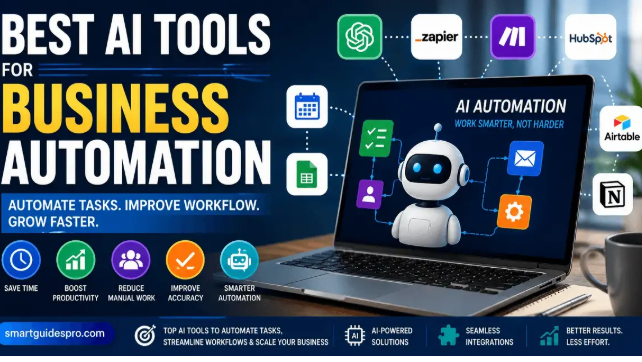

Understanding Business Automation
Business automation refers to the use of technology to perform recurring tasks or processes in a business where manual effort can be minimized. This encompasses a wide range of applications that streamline business operations, making them more efficient and effective. For entrepreneurs, employing automation tools is crucial not only for operational efficiency but also for achieving business scalability.
One of the primary benefits of business automation is the significant reduction in manual effort. Entrepreneurs often juggle multiple responsibilities, from managing finances to overseeing marketing efforts. Automation minimizes the time spent on repetitive tasks such as data entry, invoicing, and tracking leads. By leveraging technology to automate these processes, entrepreneurs can allocate their time more effectively, focusing on core business strategies and growth initiatives.
Moreover, automating various functions enhances accuracy and reduces the potential for human error, which is essential in maintaining operational integrity. Automation tools can ensure consistency in tasks, such as sending follow-up emails or scheduling social media posts, thereby maintaining a professional image while freeing entrepreneurs from the burdens of routine activities.
In the dynamic landscape of business, automation equips entrepreneurs to be more responsive to changes in the market. When processes are streamlined, businesses can quickly adapt their strategies and operations to meet evolving customer demands or trends. This flexibility is vital for maintaining a competitive edge and driving innovation.
Ultimately, business automation plays a significant role in supporting growth. By removing the bottlenecks associated with manual processes, entrepreneurs are enabled to enhance productivity, scale their operations, and invest time in high-impact areas such as product development and customer relationships. In today’s fast-paced environment, incorporating automation is not just advantageous, it is essential for any entrepreneur looking to thrive.
Benefits of Using Automation Tools
In the contemporary business landscape, automation tools have emerged as essential resources for entrepreneurs seeking to optimize their operational efficiency. One of the most significant advantages of utilizing these tools is increased efficiency. By automating repetitive tasks such as data entry, scheduling, and invoicing, entrepreneurs can significantly reduce the time spent on manual processes. This allows them to allocate their time to more strategic initiatives that drive growth and innovation.
Moreover, the financial implications of integrating automation tools cannot be overlooked. By streamlining workflows, businesses can achieve substantial cost savings. For instance, automating customer relationship management (CRM) can minimize the need for large customer service teams, as automated systems can handle inquiries and follow-ups more effectively. This reduction in labor costs is often complemented by improved service, as automated systems can provide customers with instant responses, leading to heightened satisfaction.
Furthermore, enhanced accuracy is another critical benefit of automation tools. Human error is an inevitable risk in manual operations, leading to inaccuracies that can affect decision-making and customer trust. Automation eliminates much of this risk by ensuring that tasks are performed consistently and precisely. For example, using automated financial reporting tools can provide entrepreneurs with real-time data that is both accurate and actionable, which assists in making informed business decisions.
In addition to efficiency and accuracy, automation tools can significantly improve customer service. Automated chatbots and response systems are now commonplace, allowing businesses to provide 24/7 assistance. This not only fosters a positive customer experience but also aids in building brand loyalty. For entrepreneurs, leveraging these technological advancements can lead to a competitive edge in the market.
Overall, the myriad benefits of using automation tools—ranging from enhanced efficiency and cost savings to improved accuracy and customer service—make a compelling case for their adoption in today’s business environment. Entrepreneurs positioned to embrace these tools will likely find themselves better equipped to meet the challenges of an evolving marketplace.
Popular Automation Tools for Marketing
In the fast-paced world of entrepreneurship, leveraging automation tools for marketing is essential for enhancing efficiency and optimizing engagement. Numerous tools cater specifically to the marketing needs of businesses, streamlining processes that would otherwise require significant manpower. This section explores some of the most popular automation tools available today, encompassing email marketing, social media management, and lead generation.
One of the leading email marketing automation tools is Mailchimp, which assists users in creating targeted email campaigns. Its user-friendly interface, combined with robust analytics, allows entrepreneurs to monitor engagement and optimize their outreach strategies. Similarly, Constant Contact offers a range of templates and powerful segmenting options to facilitate personalized marketing efforts that resonate with specific audiences.
Social media management tools, such as Hootsuite and Buffer, play a crucial role in automating the distribution of content across various platforms. These tools enable users to schedule posts in advance, analyze performance metrics, and engage with their audience, all from a centralized dashboard. By using these social media automation tools, entrepreneurs can maintain an active online presence without the need for constant manual updates.
Lead generation is another area where automation can dramatically improve efficiency. Tools like HubSpot and ClickFunnels provide comprehensive solutions for capturing and nurturing leads. These platforms facilitate the creation of landing pages and automated follow-ups, which ultimately help in converting potential customers into loyal clients. Automating lead generation processes allows entrepreneurs to focus on refining their products and services while trusting these tools to manage initial customer interactions.
By integrating these automation tools into their marketing strategies, entrepreneurs can enhance overall productivity, cultivate meaningful customer relationships, and drive growth in their ventures. Each tool offers unique features tailored to various aspects of marketing, allowing businesses to choose solutions that best fit their specific needs.
Essential Automation Tools for Sales
In the realm of modern commerce, the integration of automation tools into the sales process has become increasingly pivotal for entrepreneurs aiming to streamline operations and maximize efficiency. Among the critical categories of automation tools are customer relationship management (CRM) systems and sales funnel automation tools. These technologies not only enhance sales productivity but also play a crucial role in monitoring and analyzing performance.
Customer relationship management (CRM) systems are essential for managing a company’s interactions with current and potential customers. A robust CRM system serves as a centralized repository for customer data, enabling sales teams to track interactions, monitor customer preferences, and manage sales leads effectively. By automating routine tasks such as follow-up emails and appointment scheduling, CRM systems empower sales professionals to focus more on nurturing relationships and closing deals rather than getting bogged down by administrative duties.
Sales funnel automation tools complement CRM systems by providing a structured approach to lead management. These tools guide potential customers through the various stages of the buying process, from awareness to conversion. By automating tasks within the sales funnel, such as sending targeted email campaigns or triggering reminders for sales calls, companies can ensure that leads receive timely and relevant communications. This strategic engagement significantly increases the likelihood of conversion, thus enhancing overall sales productivity.
The combination of CRM systems and sales funnel automation tools offers entrepreneurs a robust solution for optimizing their sales strategies. By leveraging these technologies, businesses can achieve precise tracking of sales metrics, allowing for informed decision-making and continuous improvement of sales processes. Ultimately, investing in effective automation tools tailored for sales can yield significant returns, transforming how companies engage with customers and driving sustained growth.
Project Management Automation Tools
In today’s fast-paced business environment, effective project management is crucial for entrepreneurs seeking to streamline operations and enhance productivity. Project management automation tools are designed to simplify tasks related to managing projects, allowing teams to collaborate efficiently and keep track of deadlines. These tools not only help in organizing tasks but also enable better communication within teams, thereby fostering a more conducive work environment.
One of the primary functions of project management automation tools is task management. They allow entrepreneurs to create, assign, and monitor tasks easily. This functionality ensures that team members are aware of their responsibilities and deadlines. Tools such as Asana, Trello, and Monday.com provide intuitive interfaces where tasks can be broken down into actionable items, making complex projects easier to manage. This structured approach eliminates confusion and allows for clear lines of accountability.
Collaboration is another vital aspect that these tools enhance. Many project management platforms have built-in communication features, enabling team members to comment on tasks, ask questions, and share updates seamlessly. This real-time interaction helps in resolving issues quickly and keeps everyone aligned towards common project goals. Furthermore, integrations with other tools such as Slack or Microsoft Teams facilitate additional communication channels, ensuring that all team members are connected throughout the project lifecycle.
Tracking deadlines and milestones can be challenging without the right tools. Project management automation software often includes features for setting up timelines, reminders, and automated alerts. With these features, entrepreneurs can easily monitor progress and ensure that projects are progressing as planned. Tools like ClickUp and Wrike even offer visual timelines and progress tracking dashboards that provide a comprehensive overview of multiple projects at once, allowing for better strategic decisions.
In summary, project management automation tools are indispensable for entrepreneurs looking to simplify workload management, enhance team collaboration, and efficiently track project timelines. By integrating these tools into their workflows, entrepreneurs can lead their teams more effectively and achieve their project objectives with greater ease.
Finance and Accounting Automation Solutions
Entrepreneurs often find financial management and bookkeeping to be challenging tasks that can consume considerable time and resources. Automation tools designed for finance and accounting can significantly alleviate this burden, allowing business owners to focus on growth and strategy rather than tedious manual processes.
One essential area where automation tools excel is in invoicing. Software solutions such as FreshBooks, QuickBooks, and Xero streamline the invoicing process by enabling users to create, send, and track invoices electronically. These tools not only enhance efficiency but also reduce human error, ensuring that all invoices are accurate and sent promptly. Furthermore, businesses can benefit from features that send automatic reminders for pending invoices, thus improving cash flow management.
Expense tracking is another crucial function of finance automation. Tools like Expensify and Receipt Bank allow users to capture receipts, categorize expenses, and generate reports with minimal manual input. By automating the tracking of business expenses, entrepreneurs gain a clearer picture of their financial health, enabling them to make informed decisions quickly. Integration with other accounting software can further simplify this process, ensuring that all financial data resides in a centralized system.
Tax preparation is an area where automation tools can save entrepreneurs significant time and reduce the complexity often associated with compliance. Services such as TurboTax and H&R Block offer features that help users prepare for tax seasons effortlessly, guiding them through the necessary forms and deductions. By maintaining accurate and organized financial records year-round, these tools ensure that entrepreneurs are well-prepared when tax deadlines approach, ultimately minimizing last-minute stress.
In conclusion, embracing finance and accounting automation solutions can greatly enhance an entrepreneur’s ability to manage their financial responsibilities efficiently. By implementing tools for invoicing, expense tracking, and tax preparation, business owners can save valuable time, reduce errors, and maintain accurate financial records, paving the way for business success.
Automation Tools for Customer Support
In the rapidly evolving business landscape, the integration of automation tools for customer support has become essential for enhancing service delivery and improving customer experience. Automation tools, such as chatbots, helpdesk software, and automated response systems, are key components that allow businesses to streamline their customer interactions, ensuring timely and efficient service.
Chatbots have gained popularity as an effective means of providing immediate assistance to customers. These AI-driven tools can engage users through websites or messaging platforms, answering frequently asked questions and guiding them through various processes, thereby reducing the workload on human agents. The availability of chatbots enables businesses to offer 24/7 support, ensuring that queries are addressed promptly, which is crucial in maintaining customer satisfaction.
Helpdesk software also plays a significant role in automating customer support. By centralizing customer inquiries and interactions, helpdesk solutions enhance team collaboration and productivity. They allow support teams to track tickets, prioritize tasks, and analyze the performance of customer service operations. This functionality not only streamlines the management of customer support requests but also improves response times, ultimately leading to a more positive customer experience.
Automated response systems further contribute to this ecosystem by providing instant replies to customer inquiries. These systems can be programmed to acknowledge receipt of emails and provide estimated response times, reducing the uncertainty that customers may experience while waiting for assistance. By setting clear expectations, automated response systems help in managing customer frustration and improving overall satisfaction.
In summary, the implementation of automation tools for customer support is an investment that can yield significant returns for entrepreneurs. The effective use of chatbots, helpdesk software, and automated response systems not only enhances customer experience but also allows business owners to focus on strategic initiatives, ultimately driving growth and efficiency in operations.
Integrating Automation Tools into Your Business
In the contemporary business landscape, entrepreneurs are increasingly recognizing the benefits of integrating automation tools into their existing operations. This integration not only enhances efficiency but also allows businesses to focus on core areas that drive growth. However, achieving a successful integration of these tools requires a structured approach.
The first step in the integration process is to evaluate your business needs. This involves identifying tasks and processes that are repetitive or time-consuming. Entrepreneurs should conduct an assessment of their current workflow to pinpoint areas where automation can add the most value. For example, tasks such as email marketing, customer relationship management, and data entry are often prime candidates for automation.
Once the needs have been clearly defined, the next stage involves selecting the appropriate automation tools. A myriad of options is available in the market, each tailored to different business requirements. Entrepreneurs should consider factors such as compatibility with existing systems, the extent of automation provided, ease of use, and cost implications. Taking the time to read reviews and perhaps conducting trials will help in making informed choices.
After selecting the right tools, ensuring a smooth transition is crucial for successful integration. This can be achieved through comprehensive training for staff members and establishing clear communication regarding the changes. It is also wise to implement automation in phases rather than all at once, allowing for adjustments and learning opportunities along the way. This gradual approach minimizes disruption and aids in addressing any unforeseen challenges that may arise during the integration process.
In conclusion, integrating automation tools into your business operations is a strategic move that requires careful thought and planning. By assessing needs, selecting the right tools, and facilitating an orderly transition, entrepreneurs can harness the power of automation to propel their businesses forward.
Future Trends in Business Automation
As we advance into the future, the landscape of business automation is poised for remarkable transformation. Entrepreneurs are increasingly recognizing the importance of automation in enhancing operational efficiency, driving productivity, and enabling strategic scalability. A key trend that is expected to shape the future of business automation is the accelerated adoption of artificial intelligence (AI) and machine learning technologies. These advancements allow businesses to automate complex decision-making processes and gain invaluable insights from vast data sets, empowering entrepreneurs to make more informed choices.
Another noteworthy trend is the rise of no-code and low-code platforms. Such tools allow entrepreneurs, regardless of their technical backgrounds, to automate processes and develop applications without extensive programming knowledge. This democratization of technology enables faster implementation of automation solutions and encourages innovation among small businesses, making it accessible for a broader audience.
Moreover, the integration of automation with the Internet of Things (IoT) is set to augment operational capabilities. By seamlessly connecting devices and systems, entrepreneurs can expect real-time data collection and management, thereby enhancing responsiveness to changes in the market. This interconnectivity not only streamlines workflows but also fosters an environment where businesses can quickly adapt to emerging trends.
Furthermore, the emphasis on data security and compliance will drive the development of advanced automation tools. As businesses increasingly rely on automation, safeguarding sensitive information becomes paramount. Automation solutions that prioritize data privacy and protection will not only enhance trust but also ensure that organizations adhere to regulatory requirements.
In conclusion, the future of business automation is bright, marked by innovations that promise to reshape how entrepreneurs operate. The convergence of AI, no-code solutions, IoT, and a focus on security will create a robust ecosystem, empowering businesses to thrive in an increasingly competitive landscape. Entrepreneurs who stay attuned to these trends will undoubtedly gain a significant competitive advantage, enabling them to leverage automation for sustainable growth and success.