
Understanding the Importance of Study Habits
Effective study habits play a critical role in achieving academic success, particularly during high-stakes periods such as final exams. Understanding the importance of these habits is essential for students who seek to enhance their performance. Good study practices not only facilitate better retention of information but also contribute significantly to reducing stress levels.
When students engage in structured study sessions, they are more likely to comprehend and retain the material learned in class. Techniques such as active recall, spaced repetition, and self-testing can drastically improve one’s ability to recall information during exams. By consistently practicing these methods, learners can transform their study experiences from passive reading to active engagement, fostering a deeper understanding of the subject matter.
Furthermore, establishing a study routine helps in managing time effectively, allowing students to spread their revision over weeks or months rather than cramming just before examinations. This gradual approach not only enhances information retention but also helps alleviate anxiety, which is often associated with last-minute studying. With a clear plan and regular review sessions, students can feel more confident and prepared as exam day approaches.
In addition, effective study habits lead to improved academic performance. Research has shown that students who adopt organized study techniques tend to achieve higher grades compared to those who do not. This correlation underscores the potential impact that positive study habits can have on a student’s overall academic journey.
In conclusion, fostering effective study habits is crucial for academic success, particularly during final exams. By embracing structured and consistent study practices, students can enhance their information retention, reduce stress, and ultimately improve their performance across various subjects.
Assessing Your Current Study Habits
Understanding your current study habits is a crucial step toward enhancing academic performance, especially in preparation for final exams. The first step in this evaluation process is to reflect on your existing study practices. Take time to analyze when, where, and how you study. Consider factors such as the time of day you feel most focused, the environment in which you work best, and the methods you employ for retaining information.
One effective method to assess your practices is to maintain a study log for a week or two. During this period, record the duration of your study sessions, the subjects you focus on, and any techniques used, such as summarization, note-taking, or group discussions. After compiling this data, review your log for patterns and trends. This self-reflection can reveal what is currently effective and where improvements are necessary, fostering a greater understanding of your academic habits.
In this evaluation, it is also important to identify negative habits that may be hindering your study process. For example, are you prone to procrastination, or do distractions frequently interrupt your focus? Acknowledging these detrimental behaviors is key to overcoming them and can serve as a motivator for change. It may help to rank habits from most to least disruptive to your study routine, providing a clearer picture of what changes need to be prioritized.
Additionally, consider seeking feedback from peers or instructors regarding your study methods. Their outside perspective can provide insights into areas you might not have noticed. Engaging in discussions about effective study techniques and sharing experiences can also introduce new strategies that enhance your academic practices. By assessing your current study habits thoroughly, identifying both strengths and weaknesses, you will be better equipped to make informed adjustments, leading to improved outcomes in your final exams.
Setting Clear Goals for Study Sessions
Establishing clear goals for each study session is crucial for enhancing productivity and focus during the period leading up to final exams. One effective framework for creating these goals is the SMART criteria, which stands for Specific, Measurable, Achievable, Relevant, and Time-bound. By applying this methodology, students can streamline their study efforts and increase their chances of success.
Firstly, a specific goal clearly outlines what the student intends to accomplish. For instance, instead of just planning to “study math,” a specific goal would be “complete Chapter 5 of my math textbook, including all practice problems.” This clarity helps in directing focus and resources effectively.
Measurability is another essential component of goal setting. A good measurable goal enables students to track their progress. For example, aiming to “review three chapters of history and take notes” is measurable, allowing the student to see how many chapters they have successfully reviewed and noted.
Achievability refers to setting goals that are realistic and attainable. Students should consider their current level of understanding and the time available. For instance, instead of striving to “master calculus in one week,” a more achievable goal might be “spend one hour each day practicing calculus problems to improve my understanding of integrals.”
Relevance ensures that the goals align with the student’s overall academic objectives. For example, setting a goal to “practice quantitative reasoning problems” is relevant if a student is preparing for a mathematics exam specifically focused on that area.
Lastly, time-bound goals help to create a sense of urgency and accountability. For instance, setting a goal to “complete all flashcards for vocabulary by Friday” establishes a deadline, encouraging timely completion and preventing procrastination.
By integrating the SMART criteria into their study planning, students can significantly enhance their study habits, leading to improved performance in their final exams. Setting such structured goals makes it easier to stay on task and ensure that study sessions are fruitful and focused.
Creating a Study Schedule
Developing a personalized study schedule is a crucial step in preparing effectively for final exams. A well-structured study plan not only helps manage time wisely but also ensures that students cover all necessary subjects while giving proper attention to difficult topics. The first step in this process is conducting a comprehensive assessment of the subjects that need to be revisited. Identify which courses require more focus and which topics within those courses are particularly challenging.
Next, it is beneficial to allocate time slots for each subject. A balanced approach should be adopted, ensuring that easier subjects do not dominate the schedule at the expense of those that require more intensive revision. Create a weekly plan that spans the duration leading up to the exams, breaking down the revision into manageable sections. This allows students to tackle their coursework effectively without becoming overwhelmed.
Incorporating regular breaks into the study schedule is essential. Research has shown that prolonged study sessions can lead to diminishing returns as attention wanes. Thus, intersperse focused study periods with short breaks. For instance, following a 50-minute study session, one could take a 10-minute break to refresh and recharge. This not only boosts retention but also promotes overall well-being during a stressful revision period.
Consistency plays a pivotal role in the success of a study schedule. Striving for a routine that includes daily study times cultivates discipline and builds productive habits. It is advisable to reassess the schedule periodically, making adjustments as necessary to cater to evolving needs or unexpected challenges. Utilizing tools like planners or digital calendar apps can assist in keeping track of tasks and deadlines. In summary, a thoughtful study schedule, characterized by balanced subject allocation, regular breaks, and consistency, is instrumental in achieving optimal results in final exams.
Incorporating Active Learning Techniques
Active learning strategies play a crucial role in enhancing study habits, especially when preparing for final exams. Unlike passive studying methods, which often involve simple reading and rereading of material, active learning requires the student to engage dynamically with the content. This engagement can significantly improve both understanding and retention of the material.
One effective active learning strategy is summarization. When students write brief summaries of the material they have learned, they are not just repeating what they have read; they are processing the information, identifying key concepts, and consolidating their knowledge. Summarization helps distill large volumes of information into manageable pieces, allowing for better recall during exams.
Another valuable technique is self-explanation, where students articulate their understanding of a topic in their own words. This can involve explaining concepts to oneself or attempting to verbalize the material as if teaching someone else. Self-explanation fosters a deeper comprehension of the subject, as it pushes students to make connections between ideas and pull out underlying principles.
Teaching others is yet another effective method of active learning. When students assume the role of the teacher, they must organize their thoughts and present the information clearly, which reinforces their understanding of the subject matter. This technique not only aids in memory retention but also builds confidence in their knowledge. Engaging peers in study groups or discussing topics with classmates can amplify this effect, as collaborative learning environments encourage diverse perspectives and insights.
Incorporating these active learning strategies—summarization, self-explanation, and teaching others—can transform study habits from passive absorption to dynamic interaction with the material. This shift not only enhances knowledge retention but also builds a more robust understanding, vital for success in final exams.
Utilizing Effective Study Resources
As final exams approach, selecting and utilizing effective study resources can significantly influence your academic performance. A thorough understanding of the materials that best suit your learning style is essential to enhance productivity and retention. Effective study resources encompass a variety of tools, including textbooks, online courses, study groups, and flashcards.
Textbooks are fundamental to academic courses, providing in-depth information and structured knowledge. It is advisable to choose the most relevant textbooks that align with your curriculum and syllabus. Examine the table of contents and index to identify chapters that specifically address the topics you will be tested on. Supplementing these with online resources can broaden your perspective and understanding of the subject matter.
Online courses have become an increasingly popular way to supplement traditional learning. Websites such as Coursera, Khan Academy, and edX offer a plethora of courses on various subjects, often designed by leading universities and organizations. These platforms provide flexible learning options, allowing you to go through materials at your own pace, which can be particularly beneficial when preparing for complex final exams. It’s important to assess the course outlines and user reviews to ensure that the content is reputable and aligns with your study objectives.
Another highly effective method of studying is engaging in study groups. Collaborating with peers can encourage diverse perspectives and discussions that enhance understanding. When forming a study group, select members who are committed and serious about studying. Establish a regular schedule and a focused agenda to maximize the productivity of each session.
Lastly, flashcards can be a simple yet powerful tool to aid in memorization. They are particularly useful for definitions, formulas, and key concepts. Creating your own flashcards allows for greater personalization, which can aid retention as you are more likely to remember information you have generated yourself.
Ultimately, the key to effective studying lies not only in accessing diverse study resources but also in understanding how to utilize them effectively. By discerning which resources complement your learning style, you can develop a study strategy that works best for you, optimizing your preparation for the final exams.
Creating a Distraction-Free Study Environment
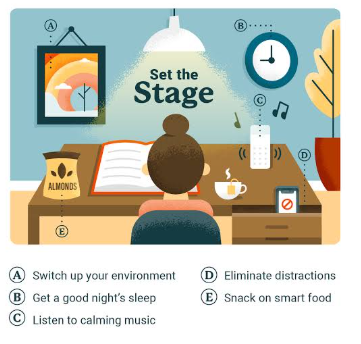
Establishing a conducive study environment is vital for effective learning, particularly as final exams approach. A well-organized, distraction-free study space can significantly enhance focus and retention of information. The first step in creating such an environment is to choose a designated area that is free from interruptions. This space should be used exclusively for studying to help train the mind to associate this location with focus, thereby improving concentration.
Next, organizing your study space is critical. Remove any unnecessary clutter from your desk or workspace, as physical distractions can lead to mental distractions. Provide adequate storage solutions for materials and supplies, ensuring that everything needed for studying is within reach, which will prevent unnecessary distractions that arise from searching for items mid-study. Also, consider arranging your materials in a systematic way, possibly categorizing them by subject or type to maintain an orderly environment.
In addition to physical organization, it is essential to be mindful of technology use. While electronic devices can be helpful study tools, they can also serve as distractions. Use technology purposefully—limit notifications while studying by putting devices in ‘Do Not Disturb’ mode or using apps designed to block distracting websites. Additionally, enhance focus by implementing study techniques such as the Pomodoro Technique, where intense study sessions are alternated with short breaks, maximizing productivity in manageable bursts.
Lighting plays a key role in maintaining an ideal study environment. A well-lit area can reduce eye strain and enhance focus. Natural light is preferable, so whenever possible, position your study space near a window. If natural light is not an option, ensure that overhead and task lighting is bright yet soothing. This balance will create an inviting atmosphere that promotes concentration.
By following these strategies—designing a specific area for study, organizing materials, using technology judiciously, and ensuring proper lighting—you can cultivate a distraction-free space that promotes effective study habits and ultimately enhances performance in final exams.
Practicing Test-Taking Strategies
Effective test-taking strategies are crucial for performing well in final exams. Developing a strong approach to managing your time during the exam can significantly influence your results. Begin by familiarizing yourself with the structure of the exam and the types of questions it will include. Allocate specific time limits for each section or question, ensuring that you leave time for review at the end. This will prevent last-minute panic and help maintain a steady pace throughout the exam.
In the case of multiple-choice questions, employing the process of elimination is an effective strategy. Start by reading each question carefully and identifying any keywords or phrases that may guide your thought process. When faced with uncertain answers, eliminate the choices that seem least applicable or that you are sure are incorrect. This increases the probability of selecting the correct answer from the remaining options and mitigates the impact of guessing.
When it comes to essay questions, a structured approach is equally important. First, take a moment to analyze the prompt. Identify the main ideas and any specific instructions provided. Create a quick outline before writing to organize your thoughts. This will help you stay focused and ensure that your response covers all necessary points effectively. Aim for a clear introduction, well-developed body paragraphs with supporting details, and a succinct conclusion that wraps up your arguments.
Finally, practicing these techniques through mock exams or study groups can enhance your confidence and familiarity with various question types. Engaging in timed practice sessions simulates the actual exam environment, helping you gauge your preparation level. By continuously refining your test-taking strategies, you can improve your effectiveness during finals and approach your studies with a greater sense of assurance.
Maintaining Motivation and Managing Stress
Staying motivated during the rigorous study process for final exams can often be challenging. One effective method to enhance motivation involves setting achievable goals, such as completing a chapter or mastering a specific concept. On achieving these goals, students can reward themselves with a small treat or leisure activity. This practice creates a positive reinforcement loop, where the mind associates studying with pleasure, thereby increasing future motivation.
Another fundamental aspect of sustaining motivation is creating an environment conducive to study. Designating a quiet, organized study space can significantly reduce distractions and promote focus. Furthermore, incorporating study sessions into a routine can instill discipline and a sense of normalcy, enabling students to approach their studies with renewed commitment.
In addition to maintaining motivation, managing stress is crucial during exam preparation. High levels of stress can impede information retention and negatively impact performance. Techniques such as mindfulness and relaxation exercises can be significantly beneficial in this regard. Mindfulness involves cultivating an awareness of the present moment, allowing students to observe their thoughts and feelings without judgment. Incorporating simple mindfulness practices, such as deep breathing exercises or brief meditation sessions, can diminish anxiety and enhance concentration.
Moreover, physical activity plays a vital role in stress management. Regular exercise has been shown to produce endorphins, known as the body’s natural mood lifters. Simple activities, like going for a walk or engaging in yoga, can alleviate mental tension and promote a sense of well-being, making the study process more enjoyable.
Overall, combining effective motivational strategies with stress management techniques can lead to a more productive and less overwhelming study experience, ultimately supporting students in their preparation for final exams.